
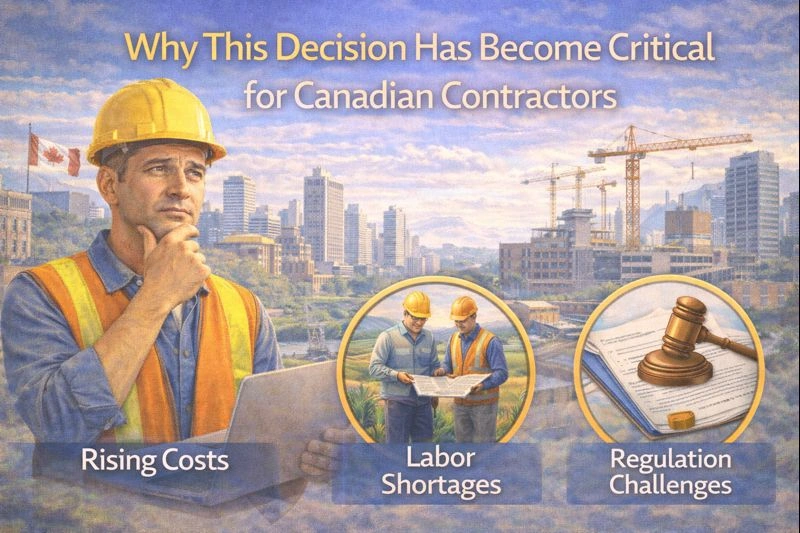
Across Canada, construction activity is being driven by:
- Infrastructure investment
- Public transit expansion
- Affordable housing programs
- Commercial development
- Resource, utility, and energy projects
Yet at the same time, contractors face:
- Rising equipment prices
- Labour shortages
- Fuel and materials inflation
- Tighter credit conditions
- Project deadline compression
This makes equipment strategy one of the most critical financial decisions a contractor can make.
For earthmoving and heavy construction assets such as:
- Excavators
- Dozers
- Loaders
- Backhoes
- Skid steers
- Compactors
- Cranes
Contractors must choose between:
- Leasing equipment long-term
- Renting equipment short-term
Each option affects:
- Profit margins
- Cash flow
- Tax efficiency
- Project scheduling
- Risk exposure
- Long-term competitiveness
This guide breaks down the true financial, operational, and strategic pros and cons of leasing vs short-term renting for Canadian contractors, so you can build a smarter 2025–2027 growth plan.
Understanding the Two Models: Leasing vs Short-Term Rentals
What Is Equipment Leasing?
Leasing is a medium-to-long-term financing structure (typically 24–72 months) where:
- The contractor uses the equipment continuously
- Monthly payments are fixed and predictable
- Ownership may transfer at the end (depending on structure)
- The contractor controls the asset day-to-day
What Is Short-Term Equipment Rental?
Short-term rental is a usage-based model where:
- Equipment is rented daily, weekly, or monthly
- The contractor does not control long-term availability
- Costs fluctuate based on demand
- Equipment is returned after project completion
Why This Comparison Matters More in 2025–2027
Three forces make this decision more impactful than ever:
- Equipment Scarcity Is No Longer Seasonal
Supply chain instability has made heavy equipment availability unpredictable year-round. - Rental Rates Are Rising Faster Than Lease Payments
Rental companies now factor inflation, fuel risk, insurance, and fleet depreciation into daily pricing. - Projects Are More Time-Sensitive Than Ever
Delays caused by equipment unavailability can result in liquidated damages and lost contracts.
Financial Comparison: Leasing vs Renting Heavy Equipment in Canada
1. Upfront Cost
Leasing:
- Small down payment or none
- Predictable monthly payments
- No massive capital outlay
Renting:
- No down payment
But high recurring daily/weekly rates - Costs escalate rapidly on longer projects
2. Long-Term Cost
Over multi-year use:
- Leasing is almost always significantly cheaper than repeated rentals
- Rentals are cost-effective only for very sporadic, one-off usage
3. Cash Flow Stability
Leasing:
- Fixed payments
- Budget predictability
- Easier forecasting
Renting:
- Variable charges
- Surprise surcharges
- Fuel, damage, late return penalties
The Hidden Cost of Rental Dependency
Many contractors underestimate:
- Lost productivity waiting for rental availability
- Substituting wrong machine sizes
- Premium charges during peak seasons
- Emergency transportation fees
- Idle workforce due to late delivery
These costs rarely appear on invoices—but they directly erode profit margins.
Tax Treatment in Canada: Leasing vs Rental
Leasing:
- Monthly payments generally qualify as fully deductible operating expenses
- Avoids depreciation accounting complexity
- Simplifies cash-based tax planning
Renting:
- Rental fees also deductible
- But lack of long-term asset strategy limits tax optimization planning
Leasing provides stronger long-term tax predictability.
Equipment Control & Project Scheduling
Leasing Benefits:
- Guaranteed availability
- No competition during peak seasons
- Custom configuration possible
- Telematics and digital monitoring integration
Rental Limitations:
- High demand shortages
- Last-minute cancellations
- Equipment returned frequently differs in condition
- Less jobsite consistency
For long and multi-phase projects, leasing eliminates scheduling risk.
Maintenance & Reliability Considerations
Leasing:
- Predictable maintenance cycles
Service history continuity - Familiar operator experience
- Easier safety compliance audits
Renting:
- Unknown operator treatment
- Mixed maintenance quality
- Higher failure risk on-site
- Disruption mid-project
Downtime on a construction site is far more expensive than the equipment itself.
Technology & Automation: Leasing Has a Major Advantage
Modern earthmoving equipment includes:
- AI-assisted grading
- Telematics
- Remote diagnostics
- Fuel optimization systems
- Emissions monitoring
Leased equipment supports:
- Continuous tech upgrades
- Better asset performance data
- Predictive maintenance
- Lower operating cost per hour
Rental fleets often lag in latest automation integration.
Seasonal Work Patterns: Which Is Better?
Renting Works Best When:
- Equipment use is extremely short-term
- One-time specialty job requirements
- No foreseeable repeat demand
Leasing Works Best When:
- Equipment is used seasonally every year
- Multiple projects overlap
- Machines rotate between sites
- Capital planning spans multiple years
Many contractors now use a hybrid model:
- Core fleet leased
- Specialty attachments rented as needed
Depreciation & Obsolescence Risk
Heavy equipment now depreciates faster because of:
- Emissions regulations
- Automation upgrades
- Rapid technology cycles
Leasing protects you from long-term residual value risk.
Renting avoids depreciation entirely—but sacrifices cost efficiency.
Labour Shortages Make Equipment Ownership Strategy Even More Important
With operator shortages across Canada:
- Machines must be reliable
- Training continuity is critical
- Familiar controls improve productivity
- Downtime creates labour inefficiencies
Leased equipment allows crews to build skill proficiency on the same machines.
The Role of Leasing in Winning High-Value Contracts
Larger infrastructure and commercial contracts increasingly require:
- Equipment availability guarantees
- Asset control verification
- Compliance documentation
- Environmental impact reporting
Leased fleets give contractors greater credibility and bidding power.
When Renting Still Makes Sense
Short-term rentals remain valuable when:
- Specialized machinery is needed for a few days
- Redundant backup is required
- Testing new equipment before committing to a lease
- Emergency replacement after breakdown
Renting is a tactical solution—not a strategic fleet foundation.
Leasing vs Renting: Side-by-Side Comparison
| Factor | Leasing | Short-Term Renting |
| Long-Term Cost | Lower | Higher |
| Cash Flow Predictability | High | Low |
| Asset Control | Full | Limited |
| Availability | Guaranteed | Uncertain |
| Maintenance Continuity | Strong | Variable |
| Tech Integration | High | Lower |
| Seasonal Cost Stability | Strong | Weak |
| Tax Predictability | Strong | Moderate |
Why 2025–2027 Favors Leasing Over Renting for Most Contractors
- Equipment prices remain elevated
- Rental companies continue cost escalation
- Infrastructure demand remains high
- Labour shortages increase downtime costs
- Longer project cycles dominate the market
Leasing now delivers strategic advantage, not just cost savings.
Financing Barriers & How Leasing Solves Them
Many contractors face:
- Thin business credit
- Seasonal revenue cycles
- Irregular project pipeline
- Rising operating expenses
Leasing is asset-backed and cash-flow focused, making approvals far more accessible than traditional loans.
Environmental Regulations & the Shift Toward Low-Emission Equipment
Low-emission and electric construction machinery is gaining traction in:
- Urban development zones
- Public infrastructure projects
- Government-funded construction
Leasing allows contractors to:
- Adopt low-emission equipment
- Stay compliant without massive capital outlays
- Upgrade as technology matures
Common Contractor Mistakes When Choosing Between Leasing & Renting
- Renting repeatedly for long-term projects
- Leasing equipment that is rarely used
- Ignoring residual value implications
- Overlooking seasonal downtime strategies
- Not bundling multiple assets into one financing plan
Professional structuring avoids these traps.
Frequently Asked Questions (FAQs)
Is leasing or renting cheaper for long-term construction projects?
Leasing is almost always cheaper if equipment is used consistently over multiple months or years.
Can small contractors qualify for leasing?
Yes. Asset-backed leasing focuses on cash flow and equipment value, not just credit history.
Is maintenance included in construction equipment leases?
Many leases include maintenance packages or service bundling options.
Does leasing limit flexibility?
No. Leasing actually increases long-term deployment flexibility compared to recurring rentals.
Can leased equipment be used across multiple job sites?
Yes. Contractors maintain full operational control of leased assets.
Final Takeaway for Canadian Contractors
Short-term rentals serve a purpose—but they should not be the backbone of a growing contracting business.
For contractors planning 2025–2027 growth:
- Lease your core fleet
- Rent your specialty equipment
- Preserve your cash
- Control your scheduling
- Protect your operational margins
This hybrid strategy delivers the strongest financial and competitive advantage.
Call to Action (CTA)
If your construction company is relying too heavily on rentals—or considering fleet expansion—expert leasing structure can immediately improve profitability and project control.
Sandhu & Sran Leasing & Financing helps Canadian contractors:
- Lease excavators, loaders, dozers, cranes & heavy equipment
- Replace rental dependency with controlled fleet ownership
- Structure seasonal payment plans
- Finance used & new construction machinery
- Bundle multi-asset leasing into one approval
- Secure approvals even with complex credit profiles
👉 Book your contractor equipment financing strategy session today:
https://www.sandhusranleasing.com