Equipment Financing in Abbotsford

Home » Equipment Financing in Abbotsford

Why Equipment Financing in Canada Is Being Redefined Right Now
Why Equipment Financing in Canada Is Being Redefined Right Now

For decades, Canadian equipment financing followed a relatively predictable model. Businesses purchased or financed machinery based on: Regulatory influence played a limited role outside of safety compliance and tax depreciation. That environment no longer exists. Between 2025 and 2028, public policy, environmental regulation, fiscal incentives, carbon pricing, electrification mandates, and digital compliance frameworks are structurally […]

Why Equipment Financing in Canada Is Being Redefined Right Now Read More »
Why Canadian SMEs Should Consider Bundling Equipment and Vehicle Leases: A Smarter Financing Strategy for 2026 and Beyond

Equipment and Vehicle Leases

Canadian small and medium-sized enterprises (SMEs) are facing a new operating reality. Between persistent inflation, interest-rate normalization, supply-chain volatility, labour shortages, clean-tech mandates, and digital transformation, running a business in 2026 is more capital-intensive than ever before. Trucks, vans, construction equipment, manufacturing machinery, IT systems, warehouse automation, refrigeration units, and even EV charging infrastructure are

Why Canadian SMEs Should Consider Bundling Equipment and Vehicle Leases: A Smarter Financing Strategy for 2026 and Beyond Read More »

Why Capital Expenditure Planning Has Become a Survival Strategy for Canadian SMEs

Why Capital Expenditure Planning Has Become a Survival Strategy for Canadian SMEs

For decades, capital expenditure (CapEx) planning for Canadian small and medium-sized enterprises (SMEs) followed relatively predictable cycles. Equipment replacement schedules were stable. Fleet upgrades followed orderly depreciation paths. Machinery pricing rose gradually. Financing was accessible through traditional channels. That stability is gone. Between post-pandemic inflation, global supply chain instability, geopolitical trade shifts, climate-driven logistics disruptions,

Why Capital Expenditure Planning Has Become a Survival Strategy for Canadian SMEs Read More »

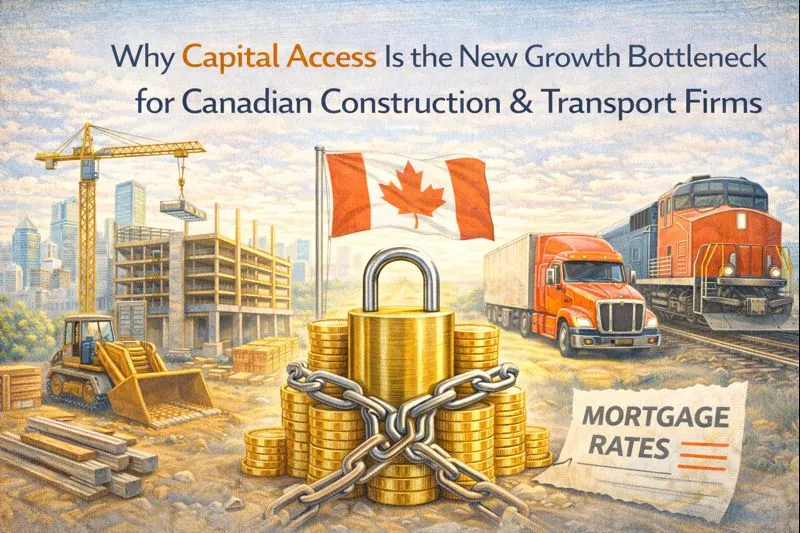
Why Capital Access Is the New Growth Bottleneck for Canadian Construction & Transport Firms

Why Capital Access Is the New Growth Bottleneck for Canadian Construction & Transport Firms

Across Canada, construction companies and transport operators are experiencing a paradox. On one hand, demand for: On the other hand, capital access remains the single greatest growth constraint. Firms are asset-rich but cash-constrained. Millions of dollars sit locked inside: This is where sale-leaseback financing has emerged as one of the most powerful financial tools for

Why Capital Access Is the New Growth Bottleneck for Canadian Construction & Transport Firms Read More »

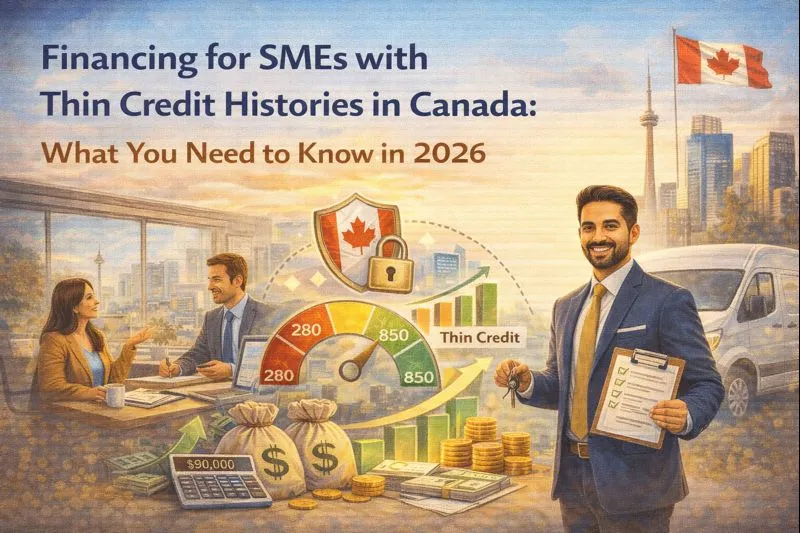
Financing for SMEs with Thin Credit Histories in Canada: What You Need to Know in 2026

Financing for SMEs with Thin Credit Histories in Canada What You Need to Know in 2026

Why Thin Credit Is the Biggest Hidden Barrier for Canadian SMEs Canada’s small and medium-sized businesses are the backbone of the economy—fueling logistics, construction, agriculture, food services, healthcare, manufacturing, and professional services. Yet one of the most common reasons SMEs are delayed or denied financing is thin credit history. A thin credit profile does not

Financing for SMEs with Thin Credit Histories in Canada: What You Need to Know in 2026 Read More »

How Higher Interest Rates & Recent Rate Cuts Affect Your Lease — What 2025–2026 Means for Canadian SMEs

How Higher Interest Rates & Recent Rate Cuts Affect Your Lease — What 2025–2026 Means for Canadian SMEs

Why Interest Rates Matter More Than Ever for Canadian Leasing Decisions Over the past few years, Canadian businesses have experienced one of the most turbulent interest-rate environments in modern history. Rapid rate hikes to control inflation were followed by the early stages of rate stabilization and expectations of future easing. For Canadian small and medium-sized

How Higher Interest Rates & Recent Rate Cuts Affect Your Lease — What 2025–2026 Means for Canadian SMEs Read More »

Lease vs Buy in 2026: What Makes Financial Sense for Canadian Construction, Transport & Agri Businesses

Lease vs Buy in 2026 What Makes Financial Sense for Canadian Construction, Transport & Agri Businesses

As Canada moves into 2026, business owners across construction, transportation, and agriculture are facing a critical financial question: Should we lease new equipment or buy it outright? With interest rates stabilizing, lending conditions tightening, and equipment costs remaining elevated, the lease-vs-buy decision has become far more strategic than in previous years. This is no longer

Lease vs Buy in 2026: What Makes Financial Sense for Canadian Construction, Transport & Agri Businesses Read More »

Why Used-Equipment Leasing Should Be Your 2026 Growth Lever: Smart Strategies for BC & Alberta SMEs

Why Used-Equipment Leasing Should Be Your 2026 Growth Lever Smart Strategies for BC & Alberta SMEs

Capital Efficiency Is the New Growth Currency Canada’s small and mid-sized businesses are entering 2026 with cautious optimism.After the Bank of Canada’s October 2025 rate cut to 2.25 percent, borrowing conditions have improved — but the landscape has changed. Equipment prices remain high, credit scrutiny persists, and cash flow has become the ultimate benchmark of

Why Used-Equipment Leasing Should Be Your 2026 Growth Lever: Smart Strategies for BC & Alberta SMEs Read More »

Flex-Lease & Tech-Lease: How Canadian SMEs Are Realigning Equipment Financing in the Digital-Sustainability Era

Flex-Lease & Tech-Lease How Canadian SMEs Are Realigning Equipment Financing in the Digital-Sustainability Era

Financing in Transition: From Ownership to Agility Across Canada, small and mid-sized businesses are quietly re-engineering how they finance essential assets.The Bank of Canada’s October 2025 rate cut to 2.25 percent has lowered borrowing costs, yet many owners are reluctant to take on new long-term debt. The reasons are clear — volatile demand, tariff-driven input

Flex-Lease & Tech-Lease: How Canadian SMEs Are Realigning Equipment Financing in the Digital-Sustainability Era Read More »

Falling Rates, Rising Opportunities: How BC & Alberta SMEs Can Refinance and Rebuild After the BoC’s 2.25% Move

Falling Rates, Rising Opportunities How BC & Alberta SMEs Can Refinance and Rebuild After the BoC’s 2.25 Move

A New Monetary Turning Point The Bank of Canada’s October 29 rate cut to 2.25% has begun to reshape Canada’s lending landscape. For entrepreneurs in Abbotsford, Surrey, and Edmonton, this is more than a quarter-point adjustment — it’s a signal that credit conditions are finally easing after nearly two years of tight margins. With GDP

Falling Rates, Rising Opportunities: How BC & Alberta SMEs Can Refinance and Rebuild After the BoC’s 2.25% Move Read More »

Scroll to Top